


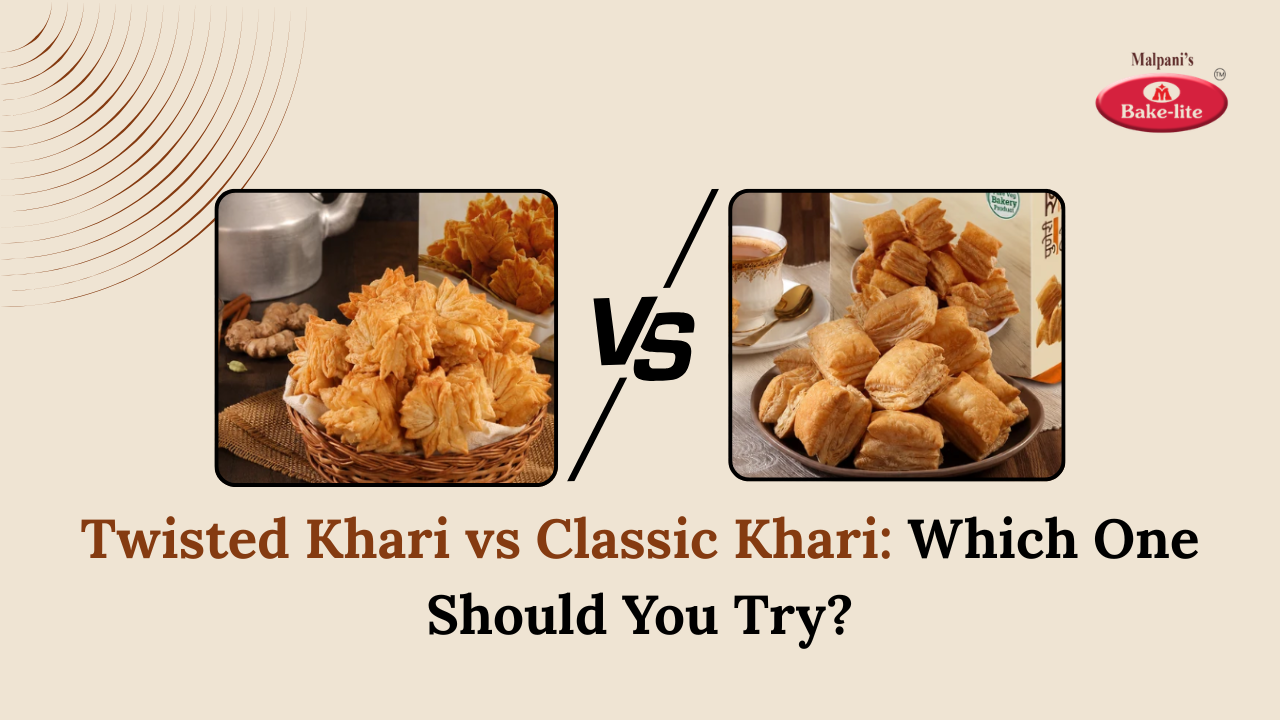
Most people have eaten both at some point — one comes flat in the packet, the other is shaped like a little spiral. They sit in the same bakery section, they're made from the same laminated dough, and they both pair well with chai. But once you actually notice the difference, it turns out you have a preference. A real one. And it's probably been consistent for longer than you've consciously thought about it.
This article is about that small but specific choice. If you keep reaching for the twisted khari without quite knowing why, or always end up with the flat classic khari version instead, there's a reason for it. The comparison here covers shape, texture, taste, and which situations each one actually fits.
What Is Classic Khari?
Classic khari is a flat, rectangular, multi-layered puff pastry snack baked until brittle. It's made through a lamination process — fat is folded into the dough repeatedly before baking, creating dozens of thin, distinct layers. When you snap a piece, it separates cleanly along those layers.
The bakery khari that most people grew up eating is this flat version. Light crunch, mild buttery flavour, and layers that practically dissolve on the tongue. It's the automatic reach — the one someone picks up when the chai is brewing and nothing in particular is on their mind.
Malpani's Puneri Special Khari (200g, Rs. 90) is a Pune-made version of this — 100% vegetarian, no artificial colours, built on the same layering method. Compact, not too crumbly, and easy to carry without making a mess.
What Is Twisted Khari?
Twisted khari is made from the same laminated dough as classic khari, is slightly sweeter and the strip of dough is twisted into a spiral before it goes into the oven. That one step changes the result more than you'd expect.
The spiral tightens the layers and increases the total surface area exposed to heat. More edges caramelise during baking, which gives the twisted version a denser crunch and a slightly more toasted flavour. It doesn't flake apart the same way — the bite is more continuous and holds together better.
Malpani's Puneri Special Twist Khari (175g) brings that spiralled format with the same vegetarian, no artificial colours approach. The Mini Twist Khari Jar (225g) is also available — a practical option for desk storage or gifting.
Shape and Texture: How They Actually Compare
|
Feature |
Classic Khari |
Twisted Khari |
|
Shape |
Flat, rectangular |
Spiral / twisted |
|
Layers |
Visible, separates easily |
Tighter, denser |
|
Texture |
Flaky, delicate |
Crunchier, more flakes |
|
Bite experience |
Breaks apart in layers |
Slightly sweeter, with continuous, denser bite |
|
Best pairing |
Light or morning chai |
Strong chai, evening snacking |
The Taste Experience
With classic khari, the fat in the layers comes through clearly — especially as it warms slightly in your hand. Each layer delivers a small burst of that mild, buttery flavour. It's light. It almost disappears, which is partly why it's easy to eat several pieces without noticing. The experience is pleasant and undemanding.
Twisted khari leads with the caramelised exterior. The first crunch is more assertive. The base flavour is similar, but those toasted edges add something the flat version doesn't have. It's the same ingredients working through a different process, arriving at a noticeably different result.
Neither one is objectively better. Classic khari suits a light, automatic snacking moment. Twisted khari suits when you want a snack that feels more present — when a single piece feels like it actually counts.
Best Occasions for Each
Classic Khari: When the Day Is Just Starting
Morning chai, before anything important has happened — that's the natural home of classic khari. Not too demanding, not heavy. Just something to hold while the tea cools. It fits a desk drawer well too. Flat, compact, and each piece breaks off cleanly without scattering crumbs across the keyboard.
For travel, the flat pack slides easily into a bag. Long drives, early morning flights, train journeys — classic khari handles all of it without becoming a crumbled mess by the time you reach in.
Twisted Khari: For When You Actually Want to Snack
Evening chai is where twisted khari earns its place. The stronger crunch and denser body suit the moment when you want to feel like you're properly snacking, not just passing time between tasks.
For guests, the spiral shape holds better on a plate and looks more deliberate than a stack of flat rectangles. At longer gatherings where people graze over an hour or two, the density means fewer pieces satisfy for longer.
A Note on Butter Khari and Jeera Khari
Butter khari refers to a richer, more fat-forward khari — more of a taste category than a separate product. If you prefer savoury over buttery, Malpani's Jeera Khari Jar (225g) is a cumin-seasoned option worth trying. Brown Khari (200g) is a whole-wheat style alternative — same layered format, slightly different flavour note — for those who want the khari experience with a little more earthiness.
Browse the full range at the Malpani Khari Collection, or go directly to the Puneri Special Khari and Puneri Special Twist Khari product pages.
The Choice Is Genuinely Personal
If you've only ever had one, try the other. They're similar enough to feel familiar — same dough, same Pune-made, 100% vegetarian origin — but different enough that the preference matters once you pay attention to it.
The twisted khari and the flat version aren't in competition. They just fit different moments. Figure out which moment you're in more often, and that's your answer.
FAQs
What is the difference between twisted khari and classic khari?
Classic khari is flat and rectangular with visible flaky layers that separate when broken. Twisted khari uses the same dough, slightly sweeter and is shaped into a spiral before baking, which tightens the layers and creates a denser crunch with more caramelised edges.
Which khari is more crunchy?
Twisted khari is generally crunchier because the spiral shape increases surface area during baking, leading to more caramelisation. Classic khari is flakier and more delicate — it breaks apart in layers rather than offering a continuous bite.
What is bakery khari made of?
Khari is made from refined wheat flour, oil or fat, salt. The layered structure comes from the lamination process — fat is folded into the dough repeatedly before baking, which creates the thin, separating layers.
Is twisted khari or classic khari better with chai?
Both pair well with chai. Classic khari suits lighter morning tea, while twisted khari works better with a strong evening cup. The choice comes down to the texture you prefer and how substantial you want the snack to feel.


