


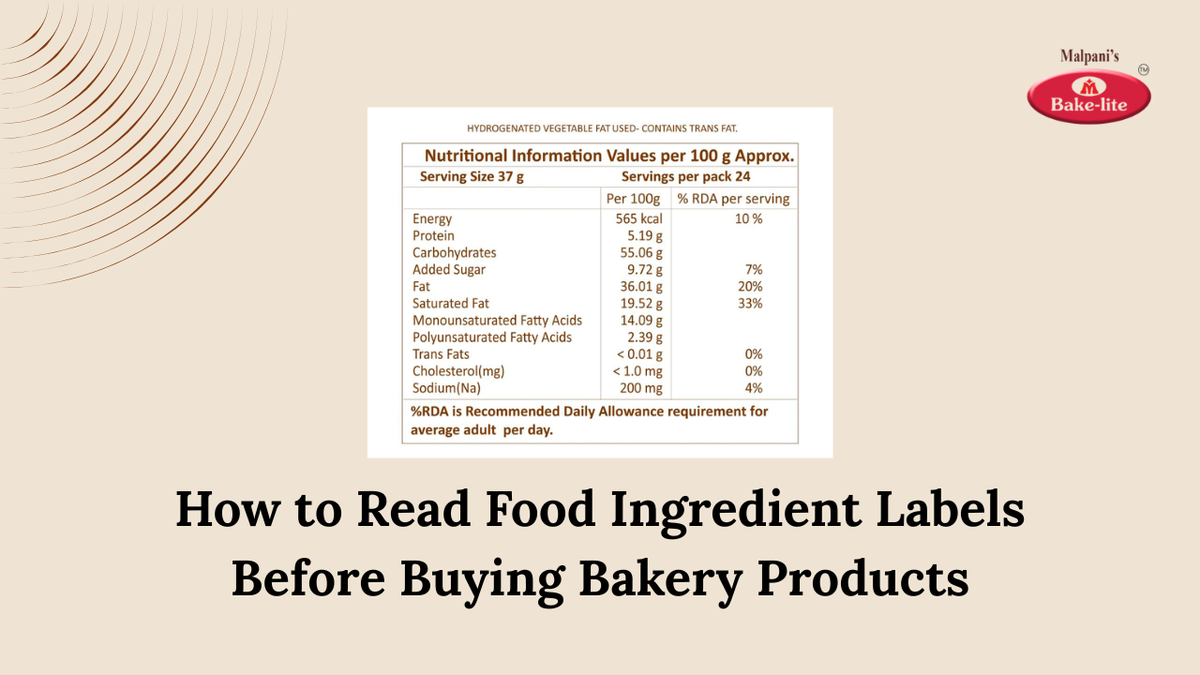
Most people in Indian kitchens were never taught how to read food labels India-style. Rather we lacked the awareness to do so. You'd glance at the front of a packet, spot the flavour, and put it in the basket. That habit is changing. More buyers — especially for packaged bakery products like toast, khari, cookies, and cream rolls — now turn the pack around before buying. The back panel carries more useful information than most people realise. This guide covers what to look for, one section at a time.
Start with the Name of the Food
The product name is the first printed item on any Indian food label, and there's a meaningful difference between the category name and the specific variant.
"Toast" is the product type. "Brown Toast No Added Sugar" is a specific variant with a specific attribute. "Tutti Frutti Toast" is another variant — same format, different ingredients and flavour profile. If you're buying for a reason — say, a pack without added sugar for an older family member — the full product name tells you immediately whether you have the right one.
The same logic applies to cookies. "Shrewsbury Cookies" and "Sweet and Salty Cookies" are both cookies but different products in every meaningful way. Getting the name right is step one before reading anything else.
Read the Ingredient List First
This is where a good ingredient label guide begins: ingredients are listed in descending order of weight. Whatever appears first makes up the largest proportion of the product.
For packaged bakery, refined wheat flour or whole wheat flour typically appears first. Then comes the fat source — butter, shortening, or hydrogenated vegetable fat — followed by sugar, salt, and raising agents. Further down the list: flavouring agents, emulsifiers with E-numbers, and preservatives.
A few things worth knowing. Shortening is usually hydrogenated fat; butter is dairy-based — different in composition and taste. Artificial colour appears as "colour (number or name)" in the list. If the front of the pack says no artificial colour, verify it in the ingredient list. Preservatives like calcium propionate extend shelf life and are common in packaged bakery products. A shorter ingredient list generally means fewer additives.
Check the Veg Mark, Allergens, and Facility Notes
The green dot is India's mandatory vegetarian mark. For vegetarian households, this is often the first check. Green dot means vegetarian; a brown or red square indicates non-vegetarian content.
Allergen information is the next section that deserves close attention. Indian bakery labels typically declare wheat (gluten), milk and milk solids, tree nuts, sesame, and soya. If anyone at home has a known sensitivity, this section matters more than anything else on the pack.
Some packs include "may contain traces of" language, which refers to shared production lines. A biscuit made in a facility that also handles nuts may carry this note. This matters for households with serious nut allergies.
If you're buying for a child, an elderly parent, or someone with food sensitivities, read allergen information before the ingredient list.
Understand Dates, Shelf Life, and Pack Condition
Packaged bakery products carry two dates: manufacturing date and best-before date. These are different things.
Manufacturing date is when the product was made. Best-before date is when quality — crispness, flavour, texture — is expected to be at its best. After that date, the product may not be unsafe, but it might not taste the way it should.
For cream rolls and soft cakes, check both dates carefully. Khari and toast have relatively longer shelf lives, but remaining shelf life still matters when buying in bulk or for gifting.
When ordering online, check for shelf-life information on the product page before placing the order. When the pack arrives, confirm the seal is intact. A broken or crushed seal can mean the product has been compromised regardless of the best-before date.
How to Read Claims Without Getting Confused
Front-of-pack claims like "no added sugar," "no artificial colour," or "no bromates" are worth reading — and verifying.
"No added sugar" means no sugar was added during manufacturing. The product may still contain natural sugars from milk solids or fruit extracts. It does not mean zero sugar.
"No artificial colour" should be confirmable in the ingredient list. If you see "colour CI(number)" listed there, the front claim needs a second look.
"No bromates" means the manufacturer hasn't used bromate-based additives that some bakeries use to improve bread texture and volume. FSSAI publishes guidelines on permitted food additives in India. The FSSAI food labelling page covers what Indian food packs are legally required to declare.
Any front-of-pack claim should be traceable to the ingredient list or a product specification page. If a claim sounds specific, check the back panel before trusting it.
Why clean label snacks India Is a Search Trend
The phrase clean label snacks India has been appearing in consumer searches more frequently over the past few years. It reflects something genuine — buyers who prefer shorter ingredient lists, recognisable ingredients, and fewer additives they cannot easily pronounce.
This isn't a regulated category in India. No certification body officially defines what qualifies. What it signals, practically, is a preference for ingredient transparency — flour, butter, sugar, salt — rather than a long row of stabilisers and E-numbered compounds.
For buyers, it's a reasonable personal benchmark. If you can read most of the ingredient list and recognise what's there, you're already making a more informed purchase than you were before.
Malpani Product Page Example
For a practical look at label transparency, the Brown Toast No Added Sugar from Malpani's Bakelite communicates the key attribute upfront in the product name itself — no hunting through a pack for the claim.
The Shrewsbury Cookies product page lists butter as a core ingredient — a recognisable input that explains the texture of the cookie without further translation.
Malpani's Bakelite, a Pune-based bakery and namkeen brand with 25+ years in the market, lists its complete product range online. The About Us section covers the brand's 100% vegetarian manufacturing setup — useful background for allergen-aware buyers who like knowing how a product is made before they order.
Labels Make Snack Buying Simpler
Reading a bakery label takes about two minutes. In those two minutes, you know what's in the product, when it was made, how long it'll last, and what allergens to watch for. The back panel is a more honest picture of the product than the front. Once it becomes a habit, buying packaged bakery products involves far less guesswork.
FAQs
What should I check first on a bakery label?
Start with the veg mark and the full product name. Then check the ingredient list and allergen information. If you have a specific concern — added sugar, artificial colour, or a known allergy — go to those sections first before reading the rest of the label.
Why are allergens important on bakery products?
Many bakery products contain wheat, milk, nuts, sesame, and soya — among the most common food allergens. For households with children, elderly members, or people with known sensitivities, the allergen section helps avoid reactions and supports more confident buying decisions.


